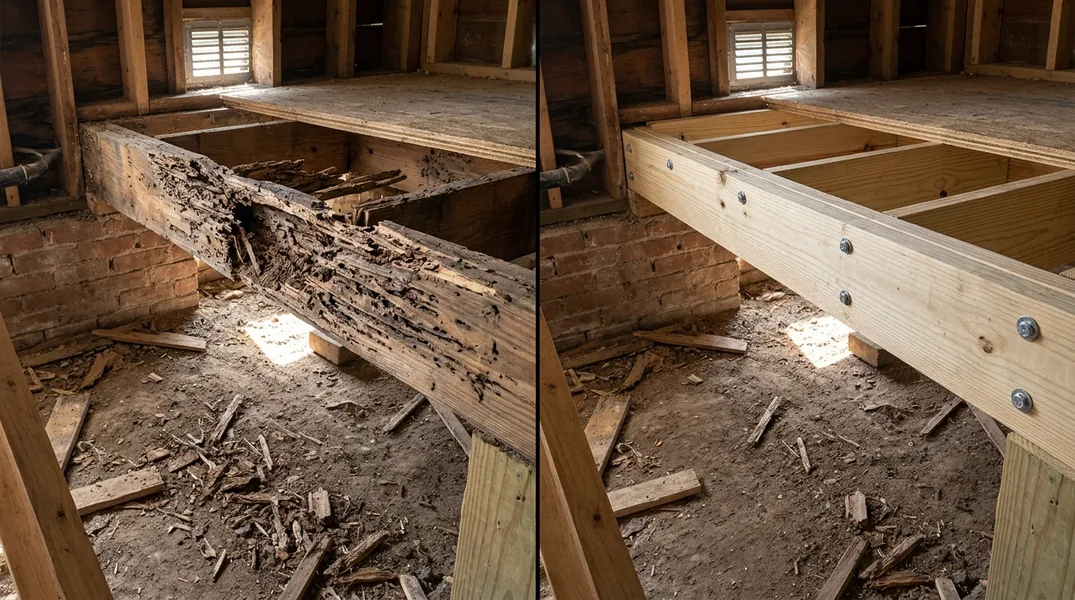
Why Clarksville Homes Are Vulnerable to Termite and Wood Rot Damage
Clarksville sits in a region where the climate, soil composition, and typical home construction create an ideal environment for wood-destroying pests and decay. The combination of warm, humid summers and mild winters means termites remain active for longer periods than in colder climates. Unlike northern states where freezing temperatures kill off termite colonies, Middle Tennessee's weather allows these insects to thrive year-round, with peak swarming activity occurring in spring and early summer.
Most homes in the Clarksville area were built with wood-frame construction, which is both economical and practical but also vulnerable to wood-eating insects and moisture-related decay. Subfloor joists, rim boards, sill plates, and wooden support beams are all potential targets. The region's humidity levels, combined with occasional water intrusion from heavy rains, create conditions where both termites and wood rot fungi thrive. When homeowners don't address moisture problems promptly, they're essentially rolling out a welcome mat for structural damage.
Signs of Termite Damage You Shouldn't Ignore
Signs of termite damage can be subtle at first, which is why many homeowners don't catch infestations until significant structural harm has occurred. One of the earliest warning signs is the presence of mud tubes along foundation walls or wooden beams. Termites build these pencil-thin tubes to travel between soil and wood while staying protected from air and light. If you spot these tubes, especially during a termite swarm middle Tennessee season (typically March through June), contact a professional immediately.
Other indicators include hollow-sounding wood when tapped with a hammer, visible tunnels or galleries inside wooden structures, and small piles of sawdust-like droppings (called frass) near baseboards or wooden beams. Sagging floors, warped door frames, and doors that suddenly stick or won't close properly can also signal termite activity below the surface. Some homeowners also notice discarded termite wings near windowsills or light sources during swarming season. If you've noticed any of these warning signs in your home, don't delay in getting a professional inspection. Early detection can save you thousands of dollars in Termite Damage Repair costs.
Wood Rot & Dry Rot Repair Near Me: When to Call a Pro
Wood rot occurs when moisture penetrates wood and fungal spores begin breaking down the cellular structure. Unlike termite damage, which leaves galleries and tunnels, wood rot causes the wood to become soft, spongy, and discolored. Dry rot, despite its name, also requires moisture to develop and is particularly common in poorly ventilated crawl spaces or areas with chronic water leaks. Both types of rot weaken the structural integrity of your home and can compromise safety if left untreated.
The best time to call for Wood Rot & Dry Rot Repair is as soon as you notice soft or discolored wood, especially around windows, door frames, deck areas, or anywhere water tends to collect. A professional carpenter can assess the extent of the damage and determine whether the affected wood can be treated or must be replaced entirely. In many cases, addressing rot early prevents the need for more extensive (and expensive) structural repairs. If you're unsure whether your home has wood rot, a trained eye from Clarksville Carpentry can provide clarity during a free estimate.
How Moisture Problems Lead to Both Termites and Wood Rot
Moisture is the common denominator in nearly all termite and wood rot problems. Termites need moisture to survive and are drawn to damp wood like bees to honey. Similarly, wood rot fungi cannot establish themselves in truly dry wood. This is why basements, crawl spaces, and areas with poor drainage are hotspots for both pests and decay. If your home has a history of water intrusion, standing water in the crawl space, or inadequate grading around the foundation, you're at significantly higher risk.
Addressing moisture problems is therefore one of the most important preventive measures you can take. This might involve improving gutter and downspout drainage, grading soil away from the foundation, installing a sump pump, or improving ventilation in crawl spaces. Many homeowners in the region also benefit from encapsulating their crawl spaces to reduce moisture and humidity. If moisture problems have already led to structural damage, you may need Floor Joist & Subfloor Repair or even Beam Replacement & Load-Bearing Wall Removal depending on severity. The key is to stop the moisture source first, then address the damage.
What to Expect During a Professional Inspection
A thorough inspection by a trained carpenter or pest professional will identify current damage and assess risk factors in your home. The inspector will examine foundation walls, rim joists, floor framing, wooden beams, and any visible wood surfaces for signs of termites, wood rot, or both. They may use moisture meters to detect hidden dampness, probe suspected soft spots with a screwdriver, and look for mud tubes, galleries, or frass. A good inspection also evaluates moisture sources and drainage patterns around your home.
Once the inspection is complete, you'll receive a detailed report outlining what was found, the extent of damage, and recommended repairs. This is when you can discuss pricing and repair options. Some damage may be straightforward to fix, while other situations might require structural work or coordination with other contractors. Clarksville Carpentry can guide you through the entire process and answer your questions. If you'd like to schedule an inspection, call (931) 494-9645 or request a free estimate online.
Prevention Tips for Clarksville Homeowners
Preventing termite and wood rot damage is far more cost-effective than repairing it. Start by maintaining proper drainage around your home's foundation. Keep gutters clean, extend downspouts at least 4 to 6 feet away from the house, and grade soil so water flows away from the foundation rather than toward it. Check for and repair any water leaks promptly, especially in roofs, plumbing, and around windows and doors. Ensure your crawl space is well-ventilated and consider installing a vapor barrier if moisture levels are high.
Regular inspections are also crucial. Walk around your home's exterior at least twice a year, looking for mud tubes, water damage, or soft wood. Trim tree branches and vegetation away from your home's exterior to improve air circulation and reduce moisture. Avoid storing firewood or mulch directly against your foundation, as these materials attract termites. Finally, consider having a professional pest inspection annually, especially if you live in an older home or have had previous termite or moisture issues. Taking these preventive steps now can save you from costly repairs down the road. If you have concerns about your home's condition, Clarksville Carpentry is here to help. Contact us at (931) 494-9645 for professional advice and solutions.
Looking for a professional carpentry contractor in Clarksville? Clarksville Carpentry responds fast for all your carpentry needs.
Get a Free QuoteOur services: Wood Rot & Dry Rot Repair · Termite Damage Repair · Floor Joist & Subfloor Repair