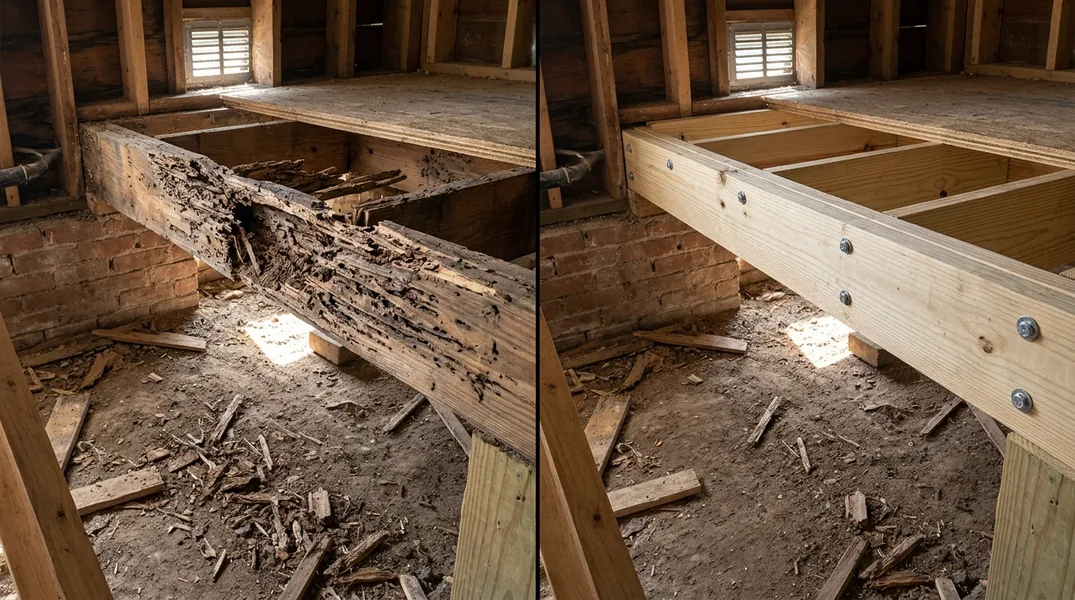
Understanding Wood Rot vs. Termite Damage
Wood rot and termite damage are two of the most common structural threats to homes in Clarksville, yet they require very different approaches. Understanding the difference between them is the first step in deciding whether your damaged wood can be repaired or needs replacement.
Wood rot occurs when moisture penetrates wood fibers and allows fungi to break down the wood's cellular structure. This process happens gradually over time, often in areas where water exposure is frequent: around windows, under rooflines, in basements, or near plumbing. Termite damage, by contrast, is caused by insects that actively consume wood as they tunnel through it. Termites leave behind hollow galleries and can compromise structural integrity much faster than rot. Both problems are serious, but the repair strategy differs significantly based on which threat you're facing.
The best way to determine what you're dealing with is to look for visual clues. Rotted wood typically appears soft, spongy, or discolored (often darker or lighter than surrounding wood). Termite damage leaves behind small holes, mud tubes, or a honeycomb-like interior structure when you probe affected areas. If you're unsure, a professional inspection is always worth the investment, as misdiagnosing the problem can lead to incomplete repairs and recurring damage.
Can You Repair Rotted Wood Without Replacing It?
The short answer is yes, but with important caveats. Whether you can repair rotted wood without replacing it depends on the extent of the damage and where it's located. Surface-level rot that hasn't penetrated deeply into the wood's core can often be treated and stabilized without full replacement. This involves removing the damaged portion, treating the remaining wood with fungicide, and applying epoxy fillers or wood hardeners to restore strength and appearance.
Wood Rot & Dry Rot Repair professionals in Clarksville use specialized techniques to assess rot depth and determine repairability. If rot has penetrated more than one-third of the wood's thickness, or if it affects critical structural elements like load-bearing beams or floor joists, replacement is typically the safer and more cost-effective option. Attempting to repair severely compromised structural wood can create liability issues and fail to address the underlying problem, potentially leading to more expensive damage later.
The key to successful wood rot repair without replacement is addressing the moisture source that caused the rot in the first place. Even if you repair the damaged wood perfectly, if water continues to penetrate that area, the rot will return. This means fixing leaky gutters, improving drainage, sealing cracks, or redirecting water away from vulnerable areas. Without this step, any repair is temporary.
When Termite Damaged Wood Repair Requires Full Replacement
Termite Damage Repair presents a unique challenge because termites can cause extensive hidden damage before you even notice a problem. Unlike rot, which typically appears on the surface first, termites work from the inside out, leaving the exterior wood intact while hollowing out the interior. By the time you spot evidence of termites, the structural damage is often more severe than it appears.
In most cases, significantly termite-damaged wood cannot be reliably repaired and must be replaced. Termites create galleries and voids throughout the wood that cannot be adequately filled or reinforced. Attempting to repair heavily damaged wood risks structural failure, particularly if that wood supports weight or resists lateral forces. For critical structural elements like Floor Joist & Subfloor Repair or Beam Replacement & Load-Bearing Wall Removal, replacement is almost always the only responsible option.
If you discover active termite damage, the repair process also includes pest control treatment to eliminate the colony and prevent future infestations. This is a critical step that repair alone cannot address. Professional termite remediation should be coordinated with structural repairs to ensure the problem is fully resolved.
Replace Rotted Wood Siding: Aesthetic and Structural Considerations
Siding is often the first line of defense against weather and moisture, making it a common target for wood rot. When deciding whether to replace rotted wood siding, you need to consider both appearance and structural integrity. Surface rot on siding that hasn't spread to the sheathing or framing beneath can sometimes be repaired with filler and paint, particularly if the affected area is small and isolated.
However, most rotted siding requires replacement, especially if the rot has penetrated multiple boards or reached the underlying structure. Rotted siding compromises your home's weather resistance and can allow moisture to penetrate deeper into the walls, affecting insulation and framing. Beyond the structural issue, visibly rotted or repaired siding detracts from curb appeal and can affect home value. Replacing damaged siding is often the most practical solution because modern siding materials are durable, come in many styles to match existing architecture, and provide better long-term protection than attempting to salvage compromised boards.
When replacing siding, it's also an opportunity to improve water management around your home. Installing new flashing, ensuring proper drainage, and addressing any underlying moisture issues will help prevent rot from returning to the new siding. A comprehensive approach that combines replacement with preventive measures gives you the best long-term results.
Wood Rot Repair Cost in Clarksville: What to Budget
Understanding pricing for wood rot repairs helps you make informed decisions about repair versus replacement. The cost of repairs varies widely based on the extent of damage, the location of the affected wood, and whether structural elements are involved. Small surface repairs might cost $300 to $800, while more extensive repairs affecting multiple areas or structural components can range from $2,000 to $10,000 or more.
Full replacement of rotted wood sections, particularly if they involve siding, joists, or beams, typically costs more than repair but may be necessary for safety and durability. A small section of siding replacement might run $1,000 to $3,000, while structural beam replacement or Floor Joist & Subfloor Repair projects can exceed $5,000 depending on the scope. Labor costs, material quality, and the complexity of accessing the damaged area all influence the final bill.
The most cost-effective approach is prevention and early detection. Addressing rot in its early stages when repair is still viable costs significantly less than waiting until replacement becomes necessary. Regular inspections, maintaining gutters, and promptly fixing water leaks can save thousands in repair costs over time. If you're facing wood rot damage and want an accurate estimate for your specific situation, contact Clarksville Carpentry at (931) 494-9645 for a free estimate.
How to Make the Repair vs. Replace Decision
Making the right choice between repair and replacement comes down to a few key factors. First, assess the extent of damage. If rot or termite damage affects less than 10 to 15 percent of a structural element and hasn't compromised the overall load-bearing capacity, repair may be viable. If damage is more extensive or affects critical areas, replacement is safer and more cost-effective in the long run.
Second, consider the location and accessibility of the damage. Damage that's easy to access and repair, such as exterior trim or non-structural siding, is often worth repairing. Damage deep within walls, under floors, or affecting major structural components usually demands replacement because incomplete repairs in hidden areas can lead to recurring problems.
Third, evaluate the long-term value of your investment. If you're planning to stay in your home for many years, investing in quality replacement may offer better value than repeated repairs. If you're considering selling soon, the improved appearance and structural integrity of replacement may increase buyer confidence and home value more than a repair would.
Finally, address the root cause. Whether you choose repair or replacement, solving the moisture problem or termite infestation that caused the damage in the first place is essential. Without addressing the underlying cause, you'll face the same problem again within a few years. For professional guidance tailored to your specific situation, the team at Clarksville Carpentry can evaluate your damage and provide honest recommendations. Call (931) 494-9645 today or visit our website to request a free estimate.
Looking for a professional carpentry contractor in Clarksville? Clarksville Carpentry responds fast for all your carpentry needs.
Get a Free QuoteOur services: Wood Rot & Dry Rot Repair · Termite Damage Repair · Floor Joist & Subfloor Repair