The Character and Challenge of Historic Homes in Clarksville
There's something undeniably special about owning a Victorian on Madison Street or a charming Craftsman bungalow in downtown Clarksville. These homes have stories. They have bones. They have architectural details that modern construction simply doesn't replicate anymore. But here's the honest truth that every historic homeowner eventually learns: that character comes with responsibility.
Victorian and Craftsman homes were built with different materials and techniques than today's houses. The wood framing, exterior siding, and structural components age differently. They're also more vulnerable to specific problems that newer homes rarely face. If you've recently purchased one of these beauties, or you're considering it, understanding what you're getting into matters far more than the rose-tinted nostalgia of period details.
The good news is that these homes are absolutely worth maintaining and restoring. Thousands of homeowners in Clarksville have successfully preserved their historic properties for decades. The key is knowing what to look for, when to act, and which problems require professional intervention versus what you can monitor yourself.
Wood Siding: Your Home's First Line of Defense
The exterior siding on a Victorian or bungalow is more than just decoration. It's your home's primary barrier against rain, temperature swings, and moisture infiltration. Many historic homes feature original wood siding, and while it looks beautiful when well-maintained, wood siding requires honest attention to stay functional.
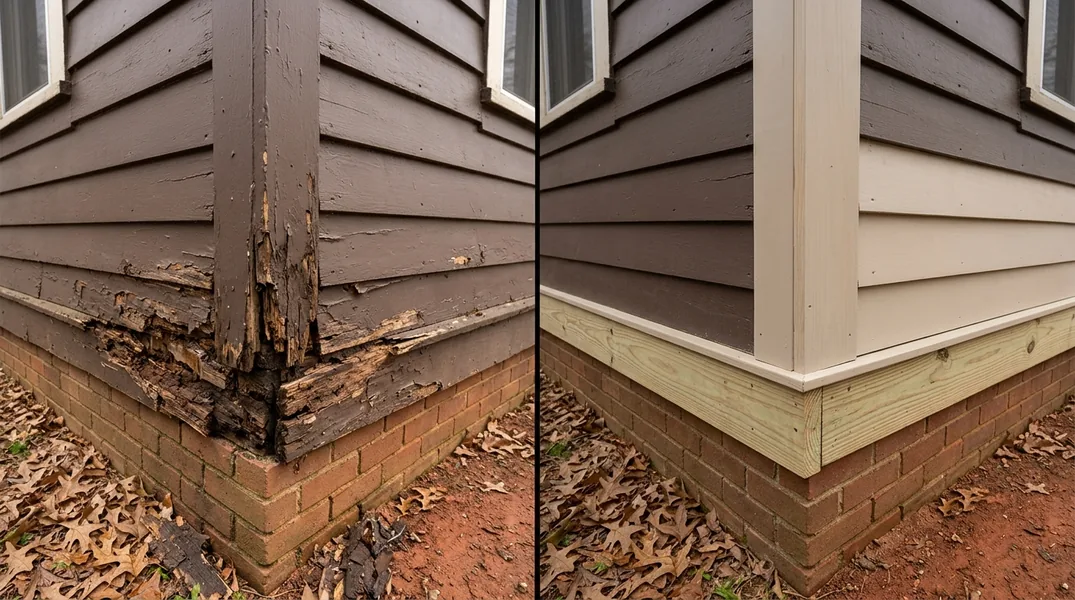
Victorian homes often have narrow lap siding or decorative shingle patterns, while bungalows typically feature wider boards or board-and-batten styles. Both can develop problems over time. Paint peels, caulk fails, and water finds its way behind the boards. Once moisture gets behind wood siding, rot develops. This isn't cosmetic damage. Rotted wood loses structural integrity and allows water to penetrate deeper into your walls, potentially affecting framing, insulation, and interior finishes.
The honest maintenance approach involves a yearly inspection of your siding, particularly on the north and west sides of your home where moisture tends to accumulate. Look for soft spots, discoloration, paint failure, or gaps where caulk has pulled away. Catching these early means you might only need to re-caulk and repaint, rather than replacing entire sections of siding. If you do find soft or rotted wood, don't delay. The cost of Wood Rot & Dry Rot Repair increases exponentially the longer you wait.
Understanding Dry Rot and Moisture Problems in Historic Structures
Dry rot is a misnomer that confuses many homeowners. Despite its name, dry rot actually requires moisture to develop. It's a fungal decay that thrives in wood that's consistently damp but not waterlogged. Historic homes are particularly susceptible because older construction often has less effective moisture barriers, limited ventilation in crawl spaces, and foundation designs that weren't engineered to modern standards.
Common locations for dry rot in Victorian and bungalow homes include basement rim joists, sill plates, crawl space framing, and areas around failed gutters or downspouts. The wood becomes spongy, darkens, and eventually crumbles. Unlike surface rot, which you might see and address quickly, dry rot often progresses silently behind walls and under floors. By the time it becomes obvious, significant structural damage may have already occurred.
Prevention is far more cost-effective than repair. Ensure your gutters and downspouts direct water at least four to six feet away from your foundation. Maintain proper grading so water slopes away from your home. Ventilate crawl spaces adequately, and consider a vapor barrier if your home lacks one. If you suspect dry rot in your historic home, professional assessment is essential. Clarksville Carpentry can evaluate the extent of damage and recommend whether repair or replacement is necessary.
When Structural Issues Demand Professional Attention
Historic homes sometimes present structural challenges that go beyond cosmetic or localized repairs. Sagging floors, cracked plaster, doors that no longer close properly, and visible gaps in exterior walls can indicate problems with floor joists, beams, or load-bearing walls. These issues develop over decades as wood settles, moisture causes decay, or the original construction proves inadequate for modern living loads.
Floor Joist & Subfloor Repair is one of the most common interventions needed in older homes. When joists decay or fail, floors become bouncy or uneven. This isn't just uncomfortable; it indicates structural compromise. Similarly, Beam Replacement & Load-Bearing Wall Removal may be necessary if you're opening up interior spaces or if existing beams have deteriorated beyond safe limits.
These repairs require engineering expertise, proper permits, and skilled craftsmanship. Attempting them without professional guidance risks not only your home's structural integrity but also your safety and your family's security. If you notice signs of structural issues, contact a qualified carpenter or structural engineer for assessment. Clarksville Carpentry has extensive experience with historic home repairs and can provide a professional evaluation and free estimate for any structural work your home needs.
Victorian House Repair and Craftsman Bungalow Repair: What's Different
While both Victorian and Craftsman homes share the challenge of age, they present different repair priorities. Victorians, typically built between 1880 and 1910, often feature ornate exterior details, complex roof lines, and multiple stories. Bungalows, popular from 1900 to 1930, emphasize simpler lines, front porches, and exposed structural elements like beams and brackets.
Victorian house repair often focuses on preserving decorative elements while addressing underlying structural decay. The ornate trim, varied siding patterns, and architectural details require careful restoration rather than replacement. Bungalow repair tends to emphasize the honest expression of materials and structure. Exposed beams, visible joinery, and straightforward construction details should be maintained authentically.
Both require understanding period-appropriate materials and techniques. Modern solutions don't always work for historic homes. For instance, vinyl siding might seem like low-maintenance, but it's historically inaccurate and can trap moisture against original wood framing. Similarly, modern caulks and paints may not adhere properly to original surfaces or allow proper wood movement. Whether you own a Madison Street Victorian or a downtown bungalow, working with contractors who understand historic home restoration makes a significant difference in long-term outcomes.
Historic Home Maintenance Cost in Clarksville: Budget Realistically
Let's be honest about money. Historic home ownership costs more than modern home ownership in most cases. This isn't because contractors are trying to overcharge you. It's because proper restoration requires skilled labor, period-appropriate materials, and often specialized techniques that take longer than standard repairs.
The pricing for wood rot repair, siding replacement, or structural work varies significantly based on severity, location, and extent of damage. A small area of surface rot might cost a few hundred dollars to address. Extensive rot affecting multiple joists or beams could run into thousands. Rather than guessing, get professional assessments. Clarksville Carpentry provides detailed estimates so you understand exactly what's needed and what it costs.
The key to managing costs is prevention and early intervention. Spending a few hundred dollars on caulk, paint, and gutter maintenance now prevents thousands in structural repair later. Annual inspections, prompt attention to water intrusion, and maintaining proper drainage around your foundation are investments that pay dividends. If you're unsure about any aspect of your home's condition, call (931) 494-9645 to discuss your concerns with experienced professionals who can help you prioritize repairs and plan your maintenance budget wisely.
Looking for a professional carpentry contractor in Clarksville? Clarksville Carpentry responds fast for all your carpentry needs.
Get a Free QuoteOur services: Wood Rot & Dry Rot Repair · Termite Damage Repair · Floor Joist & Subfloor Repair