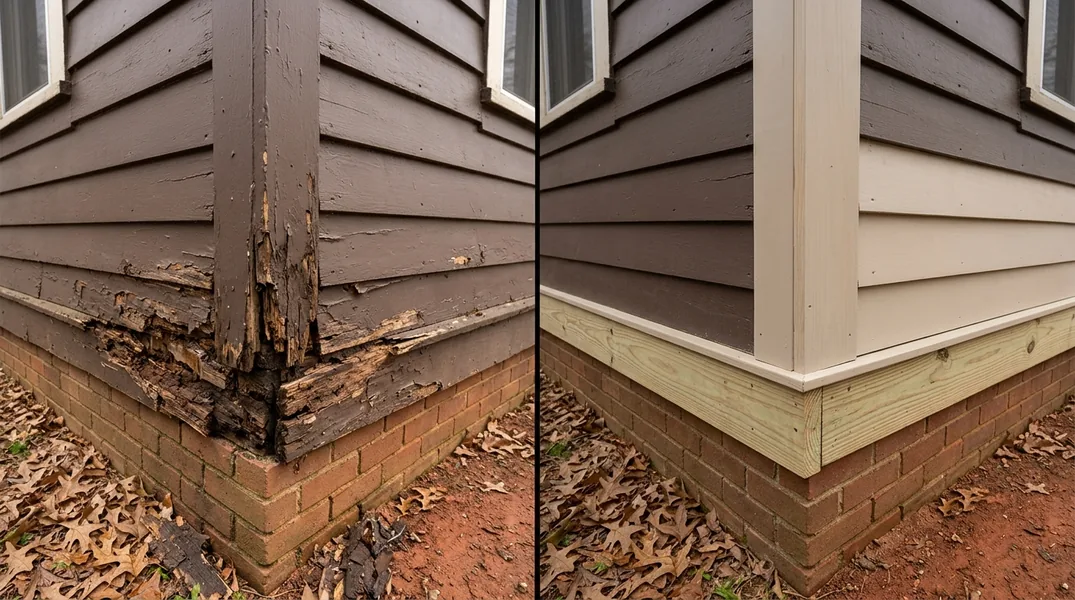
Dry Rot vs Termite Damage: What's the Difference?
If you've noticed soft, crumbling wood in your Clarksville home, you're probably wondering whether you're dealing with dry rot or termite damage. While both can cause serious structural problems, they're fundamentally different threats that require different solutions. Understanding the distinction is the first step toward protecting your home and your wallet.
Dry rot is a fungal disease that thrives in damp environments. It breaks down the cellulose in wood, turning solid timber into a crumbly, weakened mess. Termites, on the other hand, are insects that actively eat wood as a food source. They're living pests that will continue to damage your home unless they're eliminated. The good news is that once you know what to look for, you can tell them apart. Misidentifying the problem could lead you down the wrong repair path, so let's break down the telltale signs of each.
What Does Wood Rot Look Like? Identifying Dry Rot
Dry rot has a distinctive appearance that sets it apart from other wood damage. When you're inspecting your home for signs of dry rot, look for wood that appears darkened, shrunken, and deeply cracked in a cube-like pattern. The wood often takes on a brittle texture and may crumble easily if you press on it with a screwdriver or your fingernail. Unlike fresh wood, rotted wood feels spongy or hollow, and the damage typically spreads across the grain in a way that creates those characteristic cubic fractures.
The fungus that causes dry rot also produces a distinctive musty, earthy smell. If you're in a basement, crawlspace, or bathroom in your Clarksville home and notice that odor along with visible decay, dry rot is likely the culprit. You might also see fine, thread-like fungal strands (mycelium) spreading across the wood surface, which can appear white, gray, or brown. In advanced cases, you may even notice fruiting bodies that look like pancakes or shelves growing from the affected wood. These are the fungus's way of spreading spores to other areas.
Signs of Termite Damage in Wood: What to Watch For
Termite damage looks quite different from dry rot, and recognizing the signs early can save your home from catastrophic structural failure. Termites leave behind galleries or tunnels inside the wood as they eat their way through it. This creates a honeycomb-like pattern of hollowed-out sections. Unlike dry rot, which causes visible surface cracking, termite damage is often hidden inside the wood. The exterior may look relatively normal while the interior is being consumed. When you tap on wood affected by termites, it often sounds hollow, and you may see small pinholes or exit holes where termites have burrowed out.
Another key indicator of termite damage is the presence of mud tubes. Subterranean termites (the most common type) build these pencil-thin tunnels from the soil up to the wood they're feeding on. These tubes protect the termites from light and drying air. You'll often find them running along foundation walls, basement corners, or crawlspace beams. Termites also leave behind droppings that look like tiny pellets or sawdust piles, though this is less common with subterranean termites than with drywood termites. If you notice any of these signs, it's time to call in professionals for Termite Damage Repair before the problem spreads further.
Where Each Problem Typically Occurs in Your Home
Dry rot thrives in areas with moisture problems. You'll most commonly find it in basements, crawlspaces, bathrooms, kitchens, and around windows or doors where water may leak in. Any area where wood stays damp for extended periods is vulnerable. Dry rot is particularly common in older Clarksville homes with poor drainage or inadequate ventilation. It loves the conditions found in poorly maintained crawlspaces and areas where gutters aren't functioning properly. If your home has experienced water damage or flooding, dry rot can develop within weeks if the wood isn't properly dried and treated.
Termites, by contrast, enter from the ground. They typically start in the soil around your foundation and work their way up into the wooden structure of your home. You'll find termite damage most often in Floor Joist & Subfloor Repair areas, sill plates, rim joists, and lower wall cavities. They can also attack wooden porches, decks, fence posts, and any wood that makes direct contact with soil. Unlike dry rot, termites don't need the wood to be damp, though they do prefer some moisture. They can damage wood in relatively dry conditions, which is why termite prevention requires a different approach than moisture control.
Why Professional Inspection Matters for Clarksville Homeowners
While you can do a preliminary inspection yourself by looking for the signs described above, getting a professional assessment is crucial. A trained inspector can identify damage that's hidden from plain sight, determine how far the problem has spread, and recommend the appropriate repair strategy. Some wood damage is more serious than others, and misidentifying the problem could lead to incomplete repairs that leave your home vulnerable to further deterioration. At Clarksville Carpentry, we've inspected hundreds of homes in the area and know exactly what to look for.
A professional inspection also helps you understand the scope of the repair work needed. Both dry rot and termite damage can compromise structural integrity, potentially affecting Beam Replacement & Load-Bearing Wall Removal in severe cases. The only way to know for certain is to have an expert assess the situation. We recommend getting a free estimate so you understand exactly what you're dealing with and what repair options are available. Don't wait until the problem becomes catastrophic. Early detection and treatment can save you thousands of dollars in repairs down the road.
Next Steps: Getting Help for Wood Damage in Clarksville
If you suspect either dry rot or termite damage in your home, the time to act is now. The longer you wait, the more extensive and expensive the repairs become. Both problems are progressive and won't resolve on their own. Dry rot will continue to spread as long as moisture is present, and termites will keep eating through your wood structure day and night. The good news is that both are treatable when caught early.
Contact Clarksville Carpentry today at (931) 494-9645 to schedule your inspection. We provide comprehensive Wood Rot & Dry Rot Repair services and can help you understand your options. Whether you're dealing with fungal decay, active termite infestation, or structural damage that needs replacement, our team has the expertise to handle it. We'll provide you with honest, upfront pricing so you know exactly what to expect. Don't let wood damage compromise your home's safety and value. Call us or visit our website to request your free estimate today.
Looking for a professional carpentry contractor in Clarksville? Clarksville Carpentry responds fast for all your carpentry needs.
Get a Free QuoteOur services: Wood Rot & Dry Rot Repair · Termite Damage Repair · Floor Joist & Subfloor Repair